
Restaurant & Food Service Cleaning: Health Code Requirements in Seattle (2026)
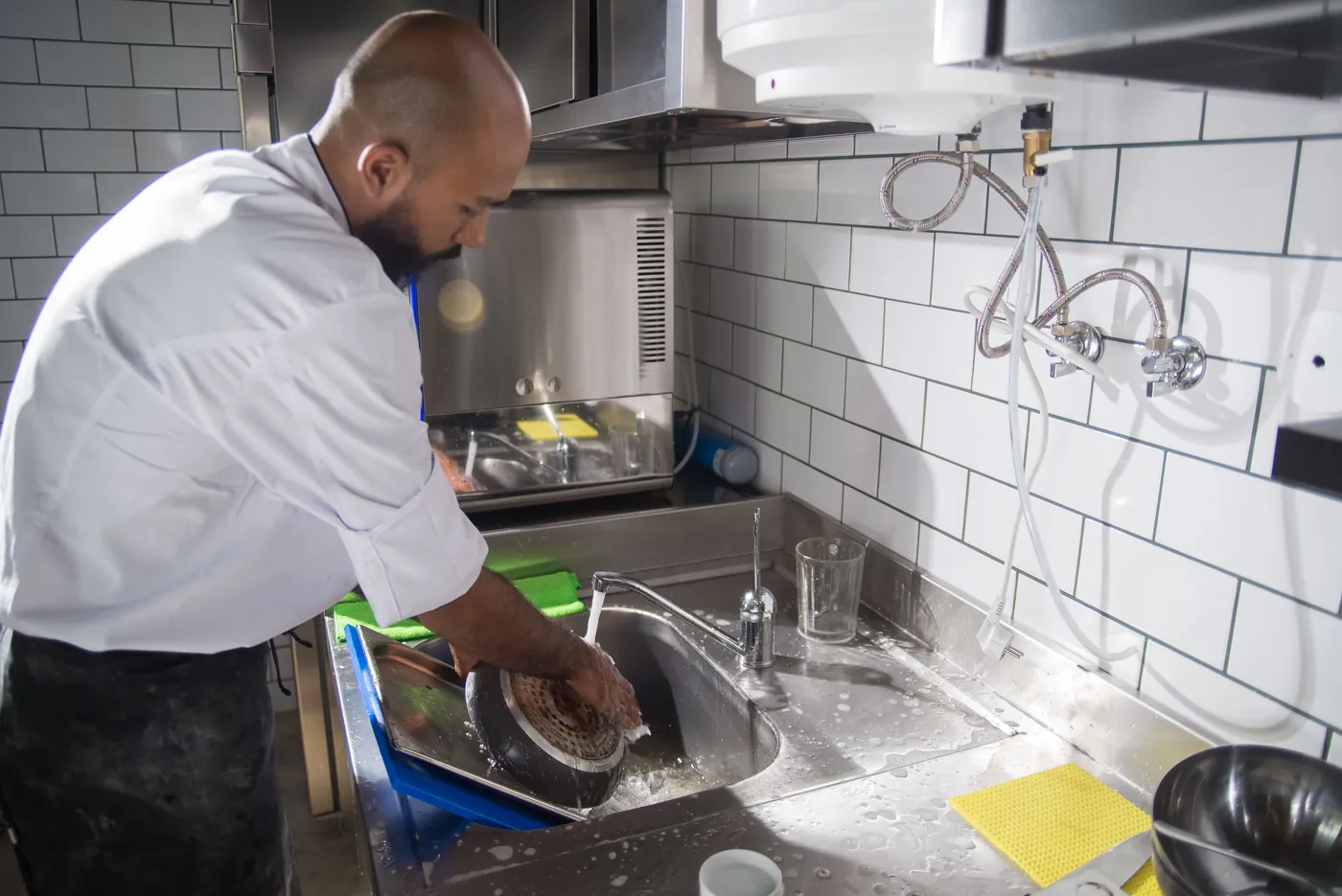
Restaurants and food-service businesses are held to King County health code standards that go well beyond typical commercial cleaning — floor drains, grease-prone surfaces, and food-contact areas need documented, frequent sanitizing. A professional restaurant cleaning service in Seattle usually runs nightly for general cleaning, separate from a monthly or quarterly deep clean of hoods, grease traps, and walk-ins.
What does restaurant cleaning cover that standard office cleaning doesn’t?
Food-service spaces generate grease, food residue, and moisture that standard commercial cleaning isn’t scoped for. A restaurant-specific visit adds:
- Floor drains and grease-prone floor areas around cooking equipment
- Food-contact surface sanitizing, not just general disinfecting
- Degreasing behind and under kitchen equipment
- Walk-in cooler and freezer floors and shelving
- Dining room table and chair sanitizing between service periods
What do King County health codes generally require for cleaning?
At a baseline, King County Public Health expects food-contact surfaces to be sanitized on a regular schedule, handwashing stations kept stocked, and floors, walls, and ceilings around food prep kept free of buildup that could attract pests. This is a general overview, not legal advice — restaurant owners should confirm current requirements directly with King County Public Health for their specific permit and inspection cycle.
How often should a commercial kitchen be deep cleaned?
- Nightly: floors, prep surfaces, equipment exteriors, and trash removal.
- Weekly: degreasing of walls and equipment, walk-in floor detail.
- Monthly / quarterly: hood and vent degreasing (typically a specialized contractor) and floor drain flushing.
How much does restaurant cleaning cost in Seattle?
| Service | Typical price |
|---|---|
| Nightly kitchen + dining cleaning (per sq ft, per visit) | $0.15 – $0.35 |
| One-time deep clean, small commercial kitchen | $400 – $1,200 |
| Standard office cleaning (for comparison) | $0.10 – $0.25 |
Opening a new location or remodeling an existing one? The pre-opening clean is a different service — see our guide to post-construction cleaning.
Frequently asked questions
Do you clean grease traps and exhaust hoods?
Hood and exhaust degreasing is typically handled by a licensed hood-cleaning specialist due to fire-code requirements; our team handles nightly kitchen surfaces, floors, and non-hood degreasing, and can coordinate scheduling around your specialist vendor.
Can cleaning happen after closing?
Yes — restaurant cleaning is almost always scheduled after close or before open so it never overlaps with service.
Do you use food-safe sanitizers?
Yes, all products used in food-contact areas are food-safe and rinse-free where required.
How fast can turnover cleaning happen between lunch and dinner service?
A dining room reset between meal periods typically takes 30–60 minutes for tables, floors, and restrooms, scheduled around your service windows.
Get a nightly or one-time cleaning quote for your Seattle restaurant, or call 1-888-914-8550.
Ready to Experience the Sensational Difference?
Book your cleaning service online in 60 seconds
Book NowRelated Cleaning Guides & Articles
What's Included in a Commercial Cleaning Service? The Complete Scope Checklist
A commercial contract covers three tiers: nightly tasks, weekly detail work, and monthly deep tasks. Here's the full scope — plus what's usually billed separately.
Medical & Dental Office Cleaning in Seattle: Compliance Checklist (2026)
Medical and dental offices clean for infection control, not appearance. EPA List N disinfectants, OSHA-aligned protocols, and what it costs in Seattle.
Post-Construction Cleaning for Offices: What's Included & What It Costs (2026)
Drywall dust, adhesive residue, and leftover debris after a build-out need a rough clean and a final clean — work standard janitorial isn't priced for.